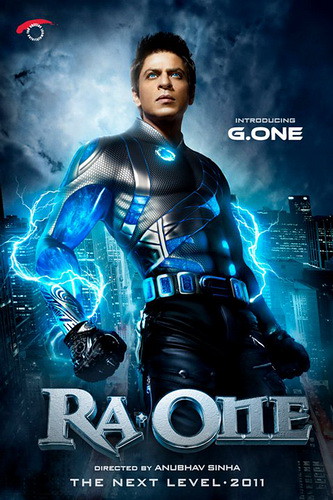
Ra.One : Partly In Defense of SRK
Monday, October 31, 2011
Dabangg
Tuesday, September 14, 2010
![]() |
| Hum yahan ke Robinhood hain, Robinhood Pandey |
New York - Review
Monday, June 29, 2009
When you visit the Ground Zero in New York, you can very well sense that quietness amidst the bustling streets of the downtown. Such is the impact of the 9/11 incident. It certainly changed our lives, perceptions and to some extent majority of the World’s outlook towards Islam. New York, is an attempt from Kabir Khan to show the after effects of 9/11 in the lives of people. Coming from Kabir Khan, a documentary film maker, if you think that this one too sounds like a documentary, you need to go and watch the film. It’s your high-end Bollywood flick that carries a message that comes across. Finally one of the better films to end the drought. Friends, the monsoon seems to have arrived in Bollywood!Secularism, Ideology, People and That Little Bias
Tuesday, June 23, 2009
The Shocking Case of Shiney Ahuja
Tuesday, June 16, 2009
As the filmdom rejoiced at the private award ceremony of the Bachchans in Macau, Shiney Ahuja took time off to etch his name in the police records back home in Mumbai. A complaint lodged by his maid-servant put him in the dock for allegedly committing rape on her. It was all shocking to say the least. The supposed victim has spoken and the alleged accused has been caught and preliminary investigations reveal that indeed there was sexual intercourse – consensual or rape is the next question that needs to be answered.
I was reading an article in the TOI that talked about men being at a disadvantage in the current legal system that has clauses to convict a man simply on the basis of the statement given by the victim provided an intercourse is evidenced. What if a woman first gives her consent and then decides to go to the police claiming rape? The possibility of the woman in question consenting to Shiney’s advances cannot be ruled out in this case too.
Before I am counted as an insensitive soul, let me bring in the other perspective. The amendment to Article 114A of the constitution to treat a “No-consent” statement from the victim as evidence to stand in a court of law was made after two policemen were allowed to go scot free by the Supreme Court (Tukaram, 1978 Cr.LJ 1864 S.C) after raping a girl in a police station. The court admitted that there was an intercourse but could not count it as rape. It held that since the girl had raised no alarm and there were no visible marks of injury on her person thereby negating the struggle by her, the accused could not be prosecuted.
I think it is justified to include the clause to treat a “no-consent” statement as a permissible evidence to safeguard the interests of a victim under coercion from people who maybe in a position of influence/power. But what if the accused in question is a common man (unlike the policemen in the Tukaram case) who can’t possibly force the victim to not raise an alarm at all? The chances of misuse remain because even if no physical harm is evidenced on the girl, she can say that she faced a threat on her life and hence did not protest. Even that would fall under the ambit of rape.
If the allegations are found to be true, Ahuja deserves all the condemnation and punishment of the highest order. But the point is that even if he is speaking the truth about consensual sex, he might actually end up as the victim here. Hopefully the law would take its course and deliver justice.
Talking of justice, here are some bizarre judicial pronouncements that I came across:
1. The case of Bhanwari Devi, wherein a judge remarked that the victim could not have been raped since she was a dalit while the accused hailed from an upper caste- who would not stoop to sexual relations with a dalit.
2. The case of Sakina from Ernakulam, Kerela: She filed a suit against the upper echelons of the bureaucracy and society of Kerela for forcibly pushing her into prostitution. Her suit was squashed by the High Court, while observing that ‘it is improbable to believe that a man who desired sex on payment would go to a reluctant woman; and that the version of the victim was not as sacrosanct as to be taken for granted.’
Straight | Movie Review
Monday, March 30, 2009
Straight does have an interesting story line. An introvert man whose biggest problem is his virginity and being subjected to ridicule by people develops a bonding with his cook at his restaurant. The problems compound as he gets confused about his sexuality. He goes about proving to himself that he is not a gay afterall. At the end of the story he realizes that he is not gay and then everyone goes home feeling happy for Pinu Patel. So far so good but when it finally comes to execution, Straight does not live upto expectations.
Straight has casual humor and a few of the scenes do make you laugh but individual scenes cannot bind a film to make it entertaining. This is where the director has to take the blame. Parvati had a decent outing with Rules:Pyar Ka Superhit Formula 6 years back but this time around, she fails to create an impact. She has executed a few comic scenes quite splendidly and also extracted good work from the lead protagonists – Vinay Pathak, Gul Panag and Anuj Chaudhari but sadly, the film fails when you look at it as a complete package. There is a satire on arranged marriages but the impact goes missing as the director repeats the same stories that have been told a lot many times. Just like the humor, everything else about the film looked casual too. Some funny scenes kept me glued initially bu tthen my thoughts began to wander as the story progressed.
Vinay Pathak is a seasoned actor and he doesn’t fail you here too. I cannot imagine anyone else playing Pinu Patel with the conviction that he did. Having said that, I think Vinay Pathak is overexposing himself by playing similar characters. Bheja Fry, Dasvidaniya and Straight all have Vinay playing a guy who is made fun of. It is about time he gives such roles a break. I am sure he is capable enough of handling other complex roles with ease too (but the question is – Are they coming?). Gul Panag oozes confidence and is a brainy actress. I feel that she is highly underrated as an actress. She does justice to her role in the film. Anuj Chaudhari is a new face. He too plays his part quite convincingly. The support cast is okay. Since they don’t get much footage, you can’t hold that against them.
There are a couple of good rock numbers in the film. Sagar Desai might be a guy to watch out for. Not related to the story but these songs do bring some life into the jerky paced movie.
There is nothing much to talk about the film or maybe I forgot to notice much as I didn’t find the narrative smooth. I would suggest that if you have not watched Straight till now, give it a miss. Believe me you will definitely end up doing something better in the time you save. I tried to like it but couldn’t do so. Straight gets a thumbs down from my side.
13B | Movie Review
Friday, March 27, 2009
After innumerable discussions that I have had on films with friends, I surmise that there is a commonality in most of these discussions. We actually don’t discuss films but the people behind them. And I think this is the case with a lot of people who think they discuss films. Probably that is the reason why we sit and spend hours analyzing even silly things made by big people and overlook some good things done by small people. 13B is one such film. I will keep myself from saying that it is a very good film. It is indeed an average product but the idea and the efforts put in by the team are creditable.I decided to watch this film after I figured that no one who had watched the film trashed it. I was surprised because I never thought that a non-entity like Vikram Kumar could team up with Madhavan (a talented but unsuccessful actor in Bollywood) and come up with a decent film. The song Sexy Mama that later changed to Crazy Mama too reinforced my belief that the film didn’t stand a chance at the Box office.
13B is a spooky thriller. It belongs to the same genre as The Ring. The film is not copied but it sure looks inspired to an extent. The best thing that I liked about the film is that it thrills you without creating any sort of paranoia about ghosts. In fact in the whole film, it is just Madhavan and then later his friend and a doctor who get to know that there is a ghost in the house while the others live normally without realizing that they are a part of the supernatural game played by the invisible ghosts (quite a welcome change from the Ramsay ghosts who made you puke). The film is about paranormal activities and has some bizarre moments but the genre is such that these unbelievable events need to be a part of the film. The biggest problem is its length. I don’t know why can’t Indian filmmakers break the rule when it comes to deciding on the length of their films. The film stretches to nearly 2 and a half hours and at times you want to question what the editors were doing when the film landed on their tables.
Vikram Kumar is the director of the film. He does a good job with this one. The film is a bilingual made in both Hindi and Tamil and released simultaneously. Vikram Kumar deserves credit for doing it as both the films have different supporting cast. He weaves a lot of interesting and thrilling scenes that make this enterprise edgy at times. To help him in the endeavor is a charged up Madhavan and an eerie background score that add value to the fare. Sadly, the length reduces the impact. The dialogues seem to be the work of an amateur. There are loop holes in the story that will seem obvious when you watch the film giving a feeling that despite a commendable effort, there is ample scope for the writer to improve. Also, Vikram Kumar’s ability to handle different characters did not come to test here as the focus was majorly on Madhavan who has been around for a decade now. I will not pass any verdict on Vikram’s caliber but for this film of his, he deserves a pat on the back.
13B is a total Madhavan movie. Besides him and the blind old man played by Dhritiman Chatterji, no one gets to portray much and they end up looking like props. Poonam Dhillon appears on the big screen after a long time but sadly, there is no meat in her character. Neetu Chandra is okay. Sachin Khedekar does a routine job. Deepak Dobriyal as the mentally challenged Ashok leaves an impression. Murli Sharma as the police inspector is relegated to playing a side kick.
The music is by Shankar Ehsaan Loy and they deliver ordinary stuff for this small budget movie. I liked a song whose words I can’t remember now but it was not required in the film at all. And just for the records it was not Crazy Mama for sure.
Now, a few scenes that I found interesting:
a.) The scene where Madhavan starts to turn the pages of a photo album and figures that the people clicked actually appeared on a television soap.
b.) The scene where the blind man’s dog refuses to enter the flat
c.) The scene where Madhavan realizes that there is something wrong in the house by clicking his photograph by stepping inside and then outside the flat.
Everyone has an opinion and since Barkha Dutt is in no way related to this film, I can take the liberty to comment on what I feel could have made this film better. First and foremost the length. Had it been a two hour affair, it could have been an out an out edge of the seat thriller. Second, the director should have worked on creating a fear inducing impact through the serial ‘Sab khairiyat’ that gets telecast in Madhavan’s house. The serial looks like a regular soap opera and hardly makes you believe that it could be a supernatural phenomenon at work. Lastly, the final scene of the movie looked more like a joke rather than anything else. If it was meant to make a shiver run through the spine, it failed to deliver. The director could have thought of a better closing scene.
13B will in all probability be a film that most of the people give a miss not because it is a bad film but because it doesn’t have any big name associated with it. I watched it on recommendation and didn’t come out feeling robbed of my time. Since it is a super natural thriller, many of the ‘real’ film enthusiasts will find it absurd. But I will give it a 3 out of five for the novelty of the effort. Mind you, 13B is not your typical Bollywood horror flick. Whether I recommend it – I will rather leave it to your judgement!
Gulal | Movie Review
Tuesday, March 24, 2009
Anurag Kashyap is an exciting prospect for Indian cinema. In him we have found a film-maker whose regime starts where Bollywood draws its limits. Angst, rebellion and sensationalism symbolize his kind of cinema. After watching both his ventures in the recent past – DevD and Gulal, I felt that through his characters he makes an extra effort to stand out from the crowd. What you get at the end of it all is a set of dysfunctional characters (let me be strong worded as Kashyap himself) who are not exactly real people. But this is what I call cinematic liberty. The same cinematic liberty that sees Yash Chopra create an imaginary Raj or a Rahul. In that sense Anurag is still a part of the same system. Hindi Films | A Historical Account | Phata Poster Nikla Hero
Thursday, March 19, 2009

Blessed with the power to survive a mighty Tsunami, heroes in Indian movies are a privileged lot. It takes a lot of conviction to reverse the order of nature and let one bleed profusely through a nerve wrecking climax of a movie and emerge victorious after beating the shit out of a 100 villainous contrivers. But our heroes do it. And they do it with so much of passion that you at times want to believe that it is possible for a man to survive 5 close range gun shots and then come out raging against the enemies and raze them to dust. The bottomline set for the Indian movie hero is - You hit him, you beat him but you can’t defeat him.
Although all heroes fall under the phylum of an all-conquering breed, there is a major difference between the heroes in Hindi films and their regional counterparts. Hindi film heroes change faces rather quickly to keep pace with the changing times unlike in regional movies where they believe in the power of preservation. Regional movies follow the adage of – “ Once a hero always a hero.” South Indian movie industry, for example, is capable of producing a movie and then its remake 30 years down the line with the same hero in the lead.
Anyways, despite calling myself a movie freak, I find myself severely handicapped while discussing regional cinema. So, rather than being all that judgemental and condescending, I will stay put on the safer bastion of Hindi films and the evolution of heroes there. I will choose actors as my reference point to discuss the era. I could be insanely prejudiced in my views so I expect you people to shed some light through your comments as well:
Ashok Kumar era : The heroes were real people then. They even sang their own songs and didn’t fight a lot. They were epitomes of gentlemen-like behavior and stuck to playing the good guy in what could be called escapist cinema. The World was engulfed in the Great Depression and that reflected in the movies. It is strange but true that in the 1930’s when there was hardly any hullabaloo over ‘female empowerment’, most of the movies were female oriented. Sample these top grossers of the era – Ghar ki Lakshmi, Bombay Ki Mohini, Daku Ki Ladki, Miss 1933, Hunterwali, Kisan Kanya , Bhabhi and the list goes on. Ashok Kumar was the first genuine hero of Hindi movies and with his arrival the scene changed. The movies started to focus more on the hero as the central character and then there was no looking back.
Dilip Kumar era : Dilip Kumar led the trio of Dev Anand, Raj Kapoor and himself to emerge as the first super star of Hindi film industry. As the brooding tragedy king, he struck chords with the audience and in the melancholy of the characters he portrayed; he smiled his way to super stardom. The heroes in the 50s-60s remained the gentlemen that they were when it all started and alongside grew another strong class of charatcer called the villain. Villains did exist even earlier on but now they started to get ample screen space. Even though the romantic heroes held sway during this period, movies based on social issues and movies that promoted nationalistic sentiments gained impetus.
Rajesh Khanna era: A very short lived one but important none the less. It marked the arrival of the tantrum throwing superstar whose birthright was to act snooty. Thousands of girls wrote love letters in blood and his popularity achieved enormous proportions before he messed it all up. It was also a time when growing resentment in the youth of the country called for a change in the hero of our movies. The love-dovey roles took a backseat and in came a force that arguably became the biggest superstar that Hindi movie industry ever produced – Amitabh Bachchan.
Amitabh Bachchan era: The angry young man had the backing of two prolific script writers going by the name of Salim Khan and Javed Akhtar. They were the heroes behind the scene that created the character of Vijay – the representation of the angry youth in the country. This era saw the rise of big blockbusters that captured the fancy of the nation. It was neither escapist nor socially relevant. The movies of this era can be categorized into the larger than life portrayal of situations. There were bandits like Gabbar who wreaked havoc in Sholay, then there was the super successful and wronged hero of Deewar, Trishul and Shakti. Amitabh’s success was so huge that other stars looked a pale shadow of him. Vinod Khanna, Shatrughan Sinha, Shashi Kapoor and Rishi Kapoor did hold on to the second wrung in the stardom ladder in the 70s and early 80s. This period was however accommodating to the alternative cinema that was made on smaller budgets and gave precedence to stories rather than the scale of production. Amol Palekar and Farookh Sheikh who never fitted the bill of a typical Bollywood Movie hero did manage to create a name for themselves during this time.
Dark Age era: 80s was a lull. Amitabh became wayward and dabbled in politics and there was a vacant spot that needed to be filled. Art house cinema gained prominence but it never got the due through commercial success. Naseeruddin Shah and Om Puri became the pioneers of this kind of cinema but they didn’t taste monetary success. It was a time when not many dared to dream big. It was a ‘flat’ period or rather a downward slope A third kind of cinema that brought in a lot of talent from South India made merry during this time. The standard however was poor. Jeetendra led the charge with a number of south Indian movie remakes. The oft repeated Juhu beach was replaced with Marina beach that had elaborate sets. 251 dancers shook their booty as the macho hero whose major task by the end of the movie was to avenge the rape of his sister/wife/girl friend sang a Bappi Da tune into the ears of his sweetheart – “Tohfa Tohfa Tohfa..laaya laaya laaya”. The successful heroes of this era looked more like caricatures in their Disco dancer clothes or the embarrassing wigs they donned. There was nothing heroic about them. The only good thing about this period was the rise of Anil Kapoor (the longest serving hero in hindi movies) who was rated as a potent candidate to topple Amitabh from the throne. Amitabh helped in the act by giving movies like Toofan and Jaadugar.
Khan era: Shahrukh Khan, Salman Khan and Aamir Khan ruled the next phase of Bollywood Movies. Shahrukh became the most saleable star due to his popularity abroad. These three catered to different classes of the audience. Salman was a hero of the masses, Aamir was the perfectionist who got the thumbs up from the other section and Shahrukh captured the fancy of the NRI audience. With the dawn of globalization, Hindi movies started to see the light of the day abroad and Shahrukh Khan became one of the most recognizable faces. Each one of them stuck to enthralling their own set of audience until ambition did them in. There was competition in everything – be it in shaping up their bods to incorporate 6/8/10 abs, changing their hair styles to suit the characters they were playing or grabbing lucrative brand endorsements.
With the entry of non-Khan stars such as Akshay Kumar and Hrithik Roshan in the fray, it suddenly seems that there is a war of survival at the top. With media having a field day covering the pot-shots they take at each other, the end of the war is still awaited. I can however say it with a level of assuredness that the public mandate is pretty fractured in this regard. With so much of money in the business, there is room for all of them to exist but there can be no clear cut number 1 now.
In the 80 years of his substantial existence, Bollywood Movie hero has managed to build a mammoth clout. From the days when they were called Bhaands to the present day when they are treated like kings, from the obese looking-mustachioed Pradeep Kumar playing Shah Jahan to the perfectly sculpted Hrithik Roshan playing Akbar, the change has at times been dramatic but many a times for the good. The movie hero is revered and accorded God-like status in our land. The aura surrounding him has been left untouched.
So, the next time you see the bruised and battered and almost dead hero taking the long walk to deliver his monologue in the climax of a movie, remember that it is not about some larger than life portrayal having no bearing on reality. The walk is a ritual and an ode to the HERO who has always won.